2020.05.08

The large-scale healthcare industry requires high-performance pharmaceutical machinery.


With the end of China’s one-child policy, the proportion of an aging population will continue to rise for a long time to come. Those just entering old age are more concerned about their health issues than their predecessors and are actively taking steps to improve it. In an era when the primary focus was on survival, physical health was little more than a luxury. Today, the situation has vastly improved. Compared with their elders, the new generation of middle-aged and elderly people not only pay greater attention to their physical well-being but also enjoy stronger economic means. The resulting surge in production capacity—and the accompanying growth of the large-scale healthcare industry—is unmistakable. Another troubling issue is that the physical condition of Chinese people is far from optimistic. Looking at children’s education, we can see that promoting robust physical health seems at odds with the demands of exam-oriented education. Teenagers of school age are subjected to exams and homework at all levels. After spending most of their day studying, my sleep has been severely curtailed—I can only play golf and occasionally swim. A wealth of data indicates that the physical condition of young Chinese people is indeed cause for concern. Some young people with weak physical foundations have developed many unhealthy habits. According to one survey, taking smoking as an example, the number of smokers in China is aging and becoming increasingly female. China has now become the world’s largest producer of tobacco—and also its biggest consumer. Moreover, an increasing number of teenagers are turning away from video games, especially left-behind children whose parents work in cities. The situation in workplaces is equally discouraging. Compared with those in developed countries in Europe and the U.S., Chinese workers face longer overtime hours due to structural imbalances and low productivity—not only in factories and construction sites, but even in office environments. Most restaurants and entertainment venues are bustling with business activities. Even those attending banquets feel overwhelmed; under performance pressure, many salespeople are forced to work until late at night—and some have already fallen ill. Rising housing prices are placing even greater survival pressures on young people from rural or less-developed areas. To afford down payments exceeding 50% of their salaries and monthly mortgage payments, those who have never enjoyed good physical or mental health since childhood—and especially only children—will naturally experience more physical and psychological problems. The most telling statistic is the declining success rate of conception among people of the right reproductive age. China, which has just stepped onto the threshold of modernization, is now facing the overuse and depletion of its national health resources. As suppliers of pharmaceuticals and healthcare equipment, industry players are benefiting from the rapid growth of the healthcare sector—a development that is both encouraging and heartbreaking. As GMP policies drive massive investments in pharmaceutical equipment, the issues discussed in this article are increasingly becoming a pressing need for the expansion of the healthcare industry. The growth in market demand has sharply contrasted with the industry’s supply capacity, and this gap is now aligning with the country’s overall strategic objectives. The situation is strikingly similar across the board: whether it’s pharmaceuticals and healthcare products or upstream equipment manufacturers, there’s an overabundance of low-end products alongside a shortage of high-quality ones. Promoting supply-side structural reform and steadfastly adjusting production capacity have thus become urgent challenges facing the broader healthcare industry. The vast majority of Western medicines sold domestically are generic drugs. Many of these generics on the market are wasting resources, suffering from overcapacity, low profits, and poor efficacy. Since 2016, China’s National Medical Products Administration has implemented a consistency evaluation program in the pharmaceutical industry. Industry leaders with high-quality resources have continuously passed the consistency evaluation, gaining a first-mover advantage. Meanwhile, these companies have embarked on another round of large-scale mergers and acquisitions. Generic drug varieties that have passed the consistency evaluation are also expanding production capacity and securing major orders. On the product strategy front, companies are continuing to increase R&D investment while simultaneously acquiring more advanced and intelligent production lines, further boosting efficiency and cutting manufacturing costs. The domestic pharmaceutical machinery market mirrors the downstream pharmaceutical market: foreign imported products command extremely high prices, and high-end domestic products remain scarce. Yet, the market is flooded with crude, low-grade products.

2020.05.08

Moving toward becoming a powerhouse in pharmaceutical equipment is an urgently needed breakthrough for the industry.


The domestic pharmaceutical machinery market is growing at an astonishing pace. By 2016, it is projected to triple—or even triple again—compared to the current size of 15 billion yuan. Under the supervision of the new healthcare reform and the new Five-Year Plan, the pharmaceutical equipment industry will clearly benefit. The high technological content of these devices means significantly reduced costs and substantial economic benefits. However, we must acknowledge that currently, many Chinese enterprises are still at the stage of imitating, improving, and combining existing technologies; they have yet to reach the level of true innovation or surpass their global counterparts. In the pharmaceutical equipment industry, few companies are increasing their investment in equipment technology. This situation within the industry calls for immediate change. For a long time, due to production standards consistently lagging behind international ones, Chinese pharmaceutical equipment has faced criticism from the international market regarding quality standards, and several trade disputes have even arisen as a result. Encouragingly, with the implementation of the new GMP guidelines, China’s pharmaceutical industry has achieved integration between international and domestic production standards, and this will further accelerate its entry into the global market. The pharmaceutical machinery industry is a specialized field that integrates pharmaceutical technology, biotechnology, chemical engineering, mechanical and manufacturing technologies, acoustics, optics, automated control, and computer applications. As such, its development is closely linked to various industries across the board. How to achieve qualitative transformation from quantitative accumulation, and how to make the leap from being a large producer of pharmaceutical equipment to becoming a powerful one—these represent significant challenges hindering the industry’s further development, and they are issues that urgently need to be addressed. It is up to industry insiders themselves to find solutions. Industry insiders suggest that companies lacking strong technological and financial backing could collaborate with pharmaceutical design institutes and research institutions, participating in the development of new drugs and process improvements at pharmaceutical plants. By strengthening regular equipment maintenance and providing customer training, these companies can win more clients. (Excerpted from China Pharmaceutical Network)

2024.12.20

Leadership Care | A delegation from the National People's Congress Visits and Conducts Research at Qiaoming Medical for Guidance and Inspection


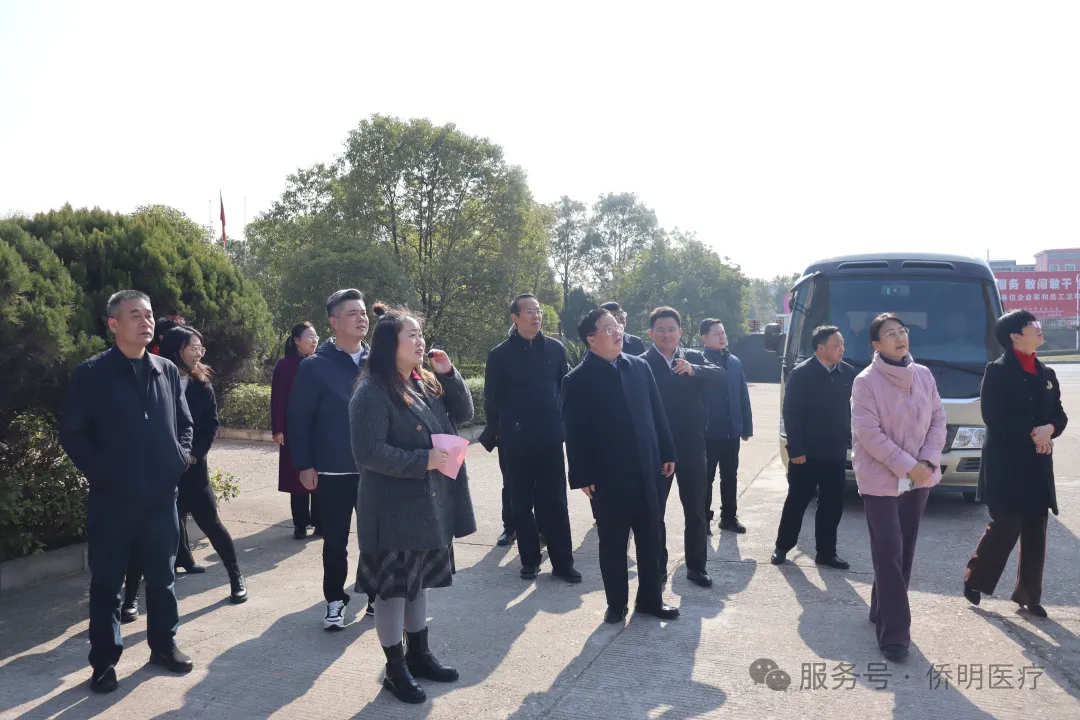
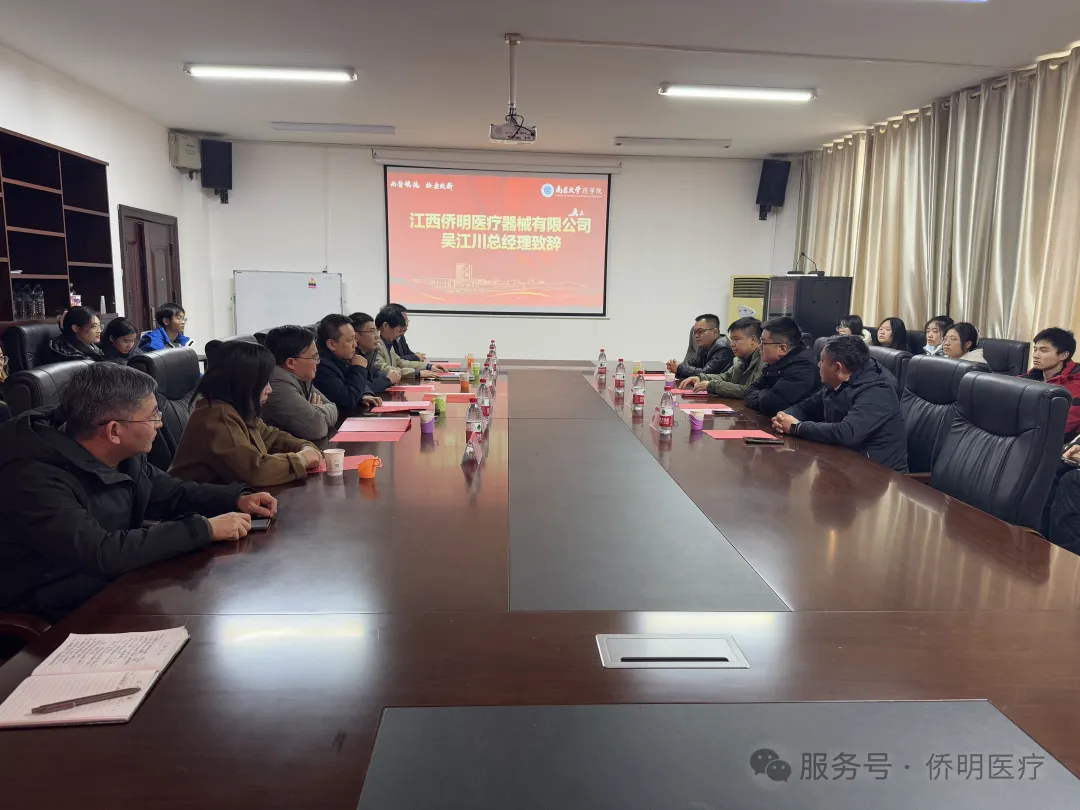
On the morning of December 19, 2024, a delegation from the National People's Congress (NPC) paid a field visit to Qiaoming Medical. The delegation was led by Cao Hongming, member of the NPC Standing Committee, Vice Chairman of the Overseas Chinese Affairs Committee, and Vice Chairman of the Central Committee of the Zhi Gong Party. This visit aimed to gain an in-depth understanding of the economic and social development situation in the Overseas Chinese Management Zone of Aoshan Town and to convey the CPC Central Committee’s care and concern for the vast number of returned overseas Chinese and their families. Xu Li, a second-level inspector at the Legislative Affairs Office of the NPC Overseas Chinese Affairs Committee, accompanied the delegation. Also joining the visit were leaders including Han Jun, member of the Jiangxi Provincial NPC Standing Committee and Director of the Foreigners, Ethnic Minorities, and Religious Affairs Working Committee; Xiong Qinxian, Deputy Director of the Yichun Municipal NPC Standing Committee; Jin Biao, Secretary of the Shanggao County Party Committee; and Li Guogang, Director of the Shanggao County NPC Standing Committee. Wu Jianghao, Secretary of the Party Branch and head of Qiaoming Medical, along with Wu Xiaotong, representative of management and manager of the Technical Department, warmly welcomed the delegation and presented a detailed report.